Concerns about child care safety were raised for years, but it took a cash discrepancy to draw national attention.
Why a funding pause has revealed deeper gaps in child safety and accountability.
There’s a particular kind of irony happening right now, one that would almost be funny if the stakes weren’t so high.
For years, parents and child care providers have been saying the same thing: the system is strained, families are stretched past the limit, and there is a need for accountability in child care to keep kids safe. We’ve asked for reform in the interest of children and families, and for laws to protect children and safeguard them. But most often, those pleas are ignored.
Now, as the country hears reports that the Department of Health and Human Services (HHS) is pausing/freezing child care payments and requiring states to provide proof that funds are being spent legitimately, the attention is suddenly loud.
For many families, including mine, the impact is immediate and personal. It also exposes a deeper problem: child care systems are held to a higher standard for protecting money than for protecting children.
Child Care in the U.S. has always needed attention. Dana Suskind’s Book, “Parent Nation”, uses a metaphor that fits this moment perfectly:
“Their boats are leaking, and they are struggling to ferry their children across the river to a bright future.”
That’s the truth that many families have lived with for a long time. Parents have been patching holes, making impossible choices, and trying to build stability for their kids inside a system that often feels impossible, with child care costs now rival rent.
Nationally, among children, 55% of those aged five and under who are not enrolled in kindergarten were in at least one weekly non-parental care arrangement. Among those children, 66% were in center-based care, 34% in relative care, and 17% in non-relative home-based care.
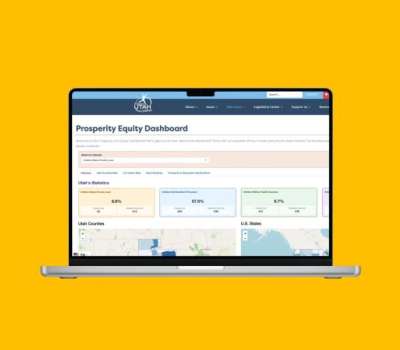
There is clearly a need within our country for care, specifically, in Utah, where data proves that licensed child care program capacity is only sufficient to serve about 36% of all children under six whose parents are working.
And yet, when we’ve called for reforms based on children’s needs, we’ve frequently been ignored.
But now? Suddenly, there is urgency. Not because children’s safety is a priority or the livelihood of families is at risk, but because of a discrepancy in funds. As a result, 1.4 million children and families will pay the price.
What does The Freeze Mean for Americans?
Most states receive the vast majority of their child care funding through the Child Care and Development Block Grant Act of 1990 (CCDBG Act, as amended), which is the primary federal law governing child care programs for low-income working families. CCDBG funds are awarded to state, territorial, and tribal lead agencies to subsidize the child care expenses of eligible children and to improve the overall quality and supply of child care.
Federal child care dollars don’t usually arrive as a simple monthly check. States typically draw down CCDF funding through a federal payment system as they spend money or pay providers, and those drawdowns can happen weekly or monthly, depending on the state.
If the federal government pauses payments or introduces new verification requirements, states that rely on frequent drawdowns can face immediate delays, which can quickly ripple into late provider payments and reduced access for families.
What does The Freeze Mean for Utahns?
Also, under the 2024 CCDF final rule, states must move toward prospective payments and enrollment-based payments (paying in advance/beginning of service period, more like private pay). Utah is listed among the states that have implemented or are in the process of implementing prospective payment approaches.
In layman's terms, if there’s a federal pause, Utah may need cash upfront at the start of the month to maintain stable provider payments.
The Utah Department of Workforce Services says child care subsidy payments are made directly to the provider “at the beginning of each month.” That timing matters, because disruptions tend to surface on a monthly cycle.
Equally important is who receives those funds. Providers can include licensed child care centers and in-home providers, which do not always require licensing. Advocates have raised concerns about the lack of safeguards for in-home providers for years, but those concerns have largely gone unaddressed.
In Utah, approximately 81,000 children qualify for the child care subsidy program; however, with the cuts, they will have no option available to them. This will impact families, child care centers, and businesses. While these mechanics explain how the freeze disrupts care, they don’t address a deeper question: what protections exist for children once they’re in care.
For many families, including mine, the consequences are personal.
As a single mom, I rely on child care subsidies to be able to work. If those funds are cut, I’d have to pull my son out of care, and as a single parent, that isn’t a real option. This would be devastating for families like mine who are already struggling to make ends meet.
It raises a fundamental question: Is this really about protecting federal dollars, or is it another opportunity to harm the most vulnerable?
Utah’s Financial Safeguards and What They Don’t Address
In response to the federal scrutiny, Gov. Spencer Cox posted on X that Utah’s GRIT operating principles mean zero tolerance for fraud, waste, or abuse. He said,
“Utah’s child care system includes safeguards like provider regulation, verified eligibility, limits on benefits, direct-to-provider payments, electronic attendance tracking, and agency monitoring and audits.”
Those safeguards matter, and Utah should be commended for implementing them. Payments going directly to providers reduces the risk of money being diverted, and Utah’s ARISE attendance system provides a digital record of care that can be checked and audited. In a system where fraud allegations can trigger significant federal responses, Utah’s ability to document attendance and track payment flows is a real layer of accountability.
Like many Utahns, I hope this will be enough to get funding back as quickly as possible.
But it’s also important to name what those safeguards are designed to do. They primarily address financial integrity: who gets paid, how payments move, and whether the billed activity is real. What they do not automatically guarantee is something families care just as deeply about: consistent child safety protections across all care settings.
This difference between financial accountability and child safety oversight isn’t theoretical, it’s already playing out in Utah law.
SB 221: A Child Safety Bill that Didn’t Survive the 2025 Legislative Session
In Utah, in-home care centers (residential centers) are not required to have background checks, licensing, or first aid training, creating a huge safety issue for children regarding child sexual abuse, an ongoing problem in Utah.
During the 2025 legislative session, Sen. Luz Escamilla sponsored SB 221, Child Care Revisions, a bill aimed at strengthening safety and accountability for certain residential child care settings.
SB 221 focused on basic safety restraints:
- Training for providers
- Licensing required for a certain number of children in care
- Background checks
- Home inspections
- CPR Certification
The bill passed the Senate. It did not make it through the House, highlighting a gap in priorities. Utah’s leadership is now emphasizing accountability protocols because federal dollars are under scrutiny. Yet, when lawmakers had a chance to strengthen protocols aimed directly at child safety, not just financial compliance, the votes weren’t there.
This is the Contradiction Families Can’t Ignore.
Utah’s message right now is that it takes stewardship seriously, following protocols, monitoring spending, and rooting out fraud.
But SB 221 is a recent reminder that “protocols” are not deeply valued unless they are associated with monetary value. There needs to be a shift in what we require, and what we refuse to require, in the environments where children spend much of their day.
That’s why this issue matters beyond the politics of a federal review. If our country is capable of moving this quickly to reinforce guardrails when funding is threatened, we should also be willing to reinforce guardrails that prevent unsafe care before it turns into tragedy.
Accountability Shouldn’t Only Appear When Money is on the Line.
Utah has built guardrails around taxpayer dollars; it should be just as serious about guardrails around child safety.
This situation has made clear what families have known for years: financial safeguards move quickly, while child safety safeguards lag behind.
What do we do next?
This moment calls for both immediate action and long-term reform.
First, we should:
- Push back on sudden disruptions to child care funding.
- Demand clarity and accountability in how federal reviews are conducted, without destabilizing families.
- Reject any approach that treats child care as a suspicious expense rather than an essential public good.
Second, we should use this moment to strengthen child safety.
Utah lawmakers should reintroduce SB 221 and take children’s safety as seriously as funding discrepancies. If funding cuts or freezes are what it takes to focus attention on child care, then we should use this moment to say clearly: This system has needed reform all along.
That reform must include:
- Guardrails that protect children’s safety in all care settings.
- Accessible and affordable child care for all families.
- Required training and support for caregivers.
- Livable wages for the professionals caring for our children.
As Parent Nation reminds us, this work is bigger than one program or one moment. It’s about building a society that supports children from the beginning:
“What we need is to recognize that we can lighten the parenting load by sharing it, by demanding what we need, and by asking society to help.”
Parents can’t carry this alone. Providers can’t carry this alone. And children should not be the ones who bear the consequences when policy decisions shift.
-
This blog was last revised on January 8, 2026